Funnel hacking means going through a competitor's sales process as if you were a customer, recording every step, and using what you learn to improve your own. You see the ads they run, the pages they send traffic to, the offer, the emails that follow and the upsells at checkout. It is market research done from the customer's side of the screen.
Done well, it saves months of guessing. Done badly, it produces a copy of someone else's funnel that does not fit your product, your price or your audience, and you end up paying for traffic to pages that were built to sell something else to someone else.
What you are looking for
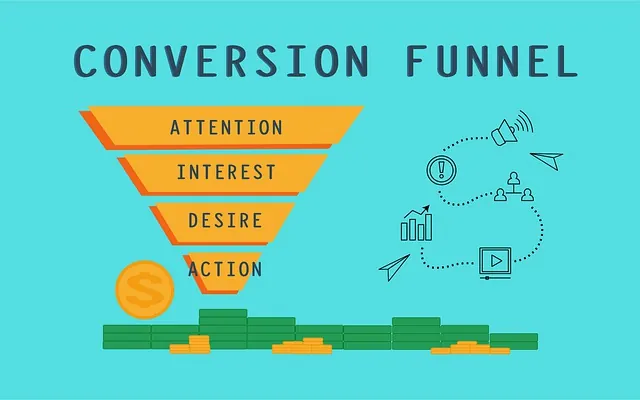
A funnel is the path from first contact to purchase and beyond. For each competitor, record the following.
- Traffic sources. Paid social, search ads, organic search, affiliates, partnerships, podcasts.
- Ads. The hooks, formats and offers, and how long each ad has been running.
- Landing pages. Headline, structure, proof, length, the call to action.
- The entry offer. Free guide, webinar, trial, quiz, low-priced product or straight to a sales call.
- Follow-up. How many emails, how often, what each one asks for, and whether there are text messages or retargeting ads.
- Checkout. Price, payment options, order bumps, upsells and downsells.
- After the sale. Onboarding emails, cross-sells, referral requests, review requests.
Step by step
1. Choose competitors that are actually making money
Copying a funnel that does not work is the classic mistake. Look for signs of profit. Ads that have run for months are a good one, since few companies keep paying for ads that lose money. So are steady hiring, rising search visibility and a funnel that has stayed broadly the same for a long time.
Pick three to five. Include at least one from outside your direct market that sells to the same kind of customer, because a business selling accountancy software to small firms may have solved a problem that a business selling HR software to the same firms has not even noticed yet.
2. Collect their ads
The Meta Ad Library shows active ads on Facebook and Instagram, with start dates. Google's ad transparency site does the same for search, YouTube and display. LinkedIn also shows the ads a company page is running. Screenshot the long-running ones and note the angle of each.
3. Go through the funnel yourself
Use a separate email address and, if possible, a separate browser profile. Opt in, register for the webinar, and if the entry product is cheap, buy it. Screenshot every page. Forward every email to a shared folder and log the day and time it arrived.
Keep going for a few weeks. Be patient. Many funnels only show their real structure in the follow-up sequence.
4. Map it
Put each funnel on one page: a box for each step, the offer and price at each point, and how long the gaps are. A spreadsheet works. So does a whiteboard. Put the maps side by side and look for patterns, such as the same entry offer appearing in several of them, prices clustering around the same point, or every competitor sending a sales email on the same day of the sequence.

5. Estimate traffic and technology
Tools such as Similarweb, Semrush and Ahrefs give rough traffic estimates and show which pages attract search visits. BuiltWith shows the platforms a site uses, such as its email system, checkout and analytics. The Wayback Machine shows how a landing page has changed over time, which hints at what they tested.
Treat all traffic numbers as estimates. They are useful for comparing sites, less so as absolute figures.
Turning notes into your own funnel
Borrow the structure, not the words. If three competitors all lead with a free assessment followed by a call, that tells you the market responds to that path. It does not tell you to use their questions or their copy.
Your offer still has to stand on its own. Look for the gaps: a question no competitor answers, a type of customer they ignore, an objection their pages skip. That is often where your funnel can win.
Once it is live, change one thing at a time. If you launch a new page, new price and new email sequence together, you will not know which change made the difference. It feels slow. It is quicker in the end.
Check the numbers before you scale. Strong conversion rates can still hide a loss if the cost per click is high or the customer does not stay. Our CTR calculator, CPC calculator and customer lifetime value calculator help you work this out.
Common mistakes
- Copying a funnel built for a different audience. A path that works for a well-known brand with a big email list may fail cold.
- Copying the offer without the reputation. Some funnels work because people already trust the brand.
- Studying only the front end. The money is often in the upsells and the follow-up, which you only see if you go all the way through.
- Stopping after one pass. Funnels change. Check the ones that matter every few months.
The legal and ethical line
Studying a public funnel is normal market research. Copying it wholesale is not. Copy, images, videos and page designs are protected by copyright in the UK and most other countries, and brand names are protected by trade marks. Write your own copy, use your own images and never imply a connection to a competitor.
Be fair with purchases too. Buying a low-priced product to study it is fine. Buying high-priced products only to claim refunds is not.
Where to learn more
For a wider view of where funnel work sits within growth, read why funnel hacking can matter more than growth hacking. Funnel teardowns are also a regular feature of conference talks on conversion and paid media, and our conference directory lists upcoming events where these subjects come up.